Can I work after getting a tattoo?
Often yes—but the job matters more than the job title. The real questions are whether required clothing or PPE rubs the tattoo, whether the area is exposed to dirt or chemicals, whether you can keep normal workplace hygiene, and whether you can safely do the job without modifying protective equipment. If PPE and a fresh tattoo conflict, PPE wins and the tattoo timing should change.
Can I safely work this shift?
Change the tattoo timing, request different duties if legitimately available, or reconsider placement. Safety equipment has to work correctly.
Now look at what the environment will expose the healing skin to.
If normal workplace controls cannot keep the area reasonably protected without changing required PPE, time the tattoo around easier or cleaner days.
Clean work clothing and normal aftercare may be enough if nothing is rubbing, crushing or trapping the tattoo all shift.
Often the easiest work situation. Keep normal hygiene and follow the artist’s dressing instructions.
Watch moisture, seams, belts and repeated motion. If the skin becomes irritated, reassess.
This is the strongest case for scheduling before time off rather than trying to engineer the shift around a fresh tattoo.
PPE ALWAYS WINS.
A fresh tattoo never gets to make required safety equipment less safe. If boots, gloves, a harness, respirator, pads or another required control conflict with the placement, change the timing, duties or placement—not the PPE.
What your job changes about healing
The problem is not that “work makes ink fall out.” The practical problems are much simpler: a fresh tattoo is healing skin, and some jobs add repeated rubbing, pressure, moisture, dirt, shared surfaces, chemical exposure, or long periods trapped under required clothing.
Friction
Tool belts, waistbands, straps, boot collars, sleeves and harnesses can repeatedly rub the same area for hours.
Pressure
Kneeling pads, body armor, leaning against equipment, seat edges and repetitive contact can keep pressing one placement.
Contamination
Grease, dust, soil, food residue, bodily fluids, shop grime and shared surfaces make clean-skin logistics harder.
Heat + moisture
Long hot shifts under clothing or PPE can leave the area sweaty and irritated even when the work itself is not especially dirty.
Chemicals + sun
Solvents, cleaners, oils and outdoor UV exposure are reasons to plan around normal workplace controls instead of improvising tattoo-specific hacks.
Placement meets work gear
Occupation should be part of placement planning. That does not mean your job gets to choose your tattoo—it means the artist should know what will repeatedly touch the area during healing.
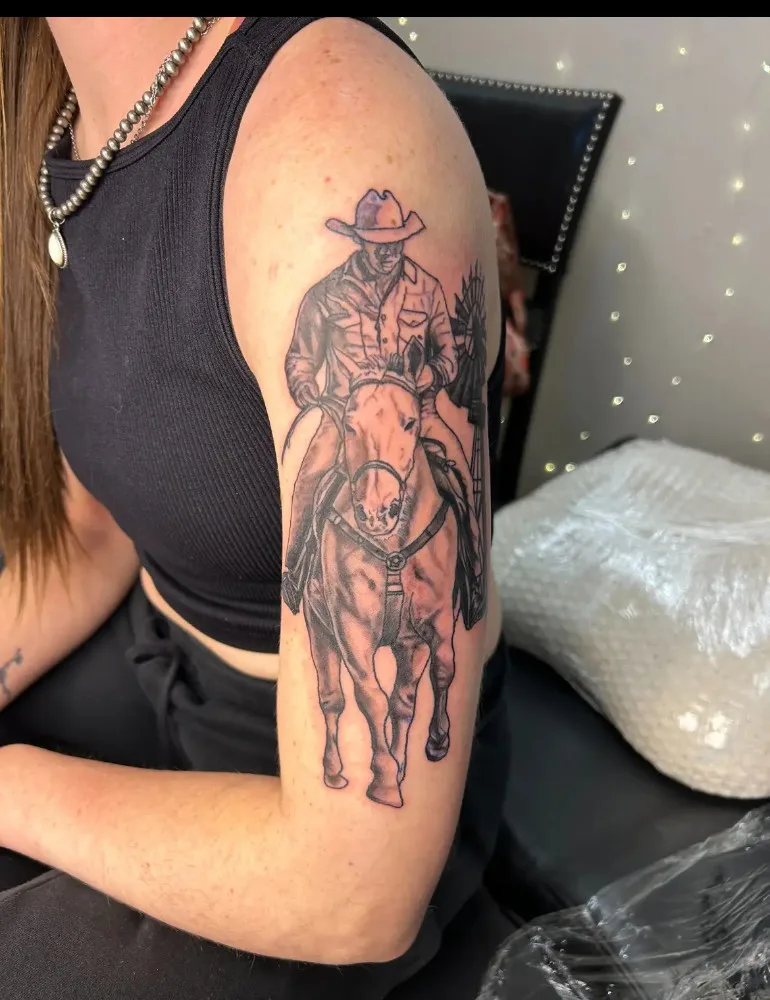
Sleeves, straps, pads
Think about uniform sleeves, backpack straps, body armor, shoulder harnesses and anything that compresses the outer arm.

Gloves, cuffs, surfaces
Forearms get leaned on, washed often, exposed to grime, and sometimes live right where glove cuffs or sleeves end.
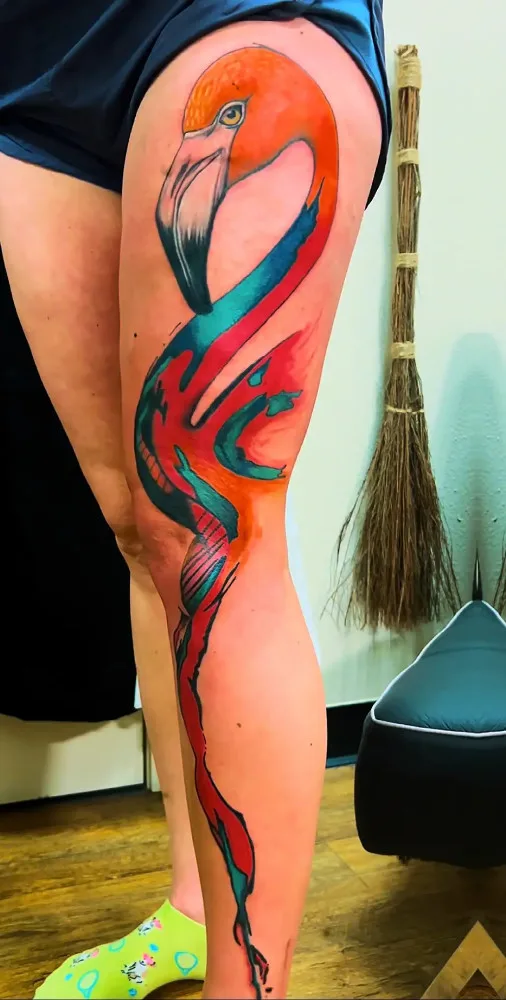
Pants, boots, kneeling
Work pants, knee pads, boot tops, compression garments and kneeling can all matter depending on exact placement.
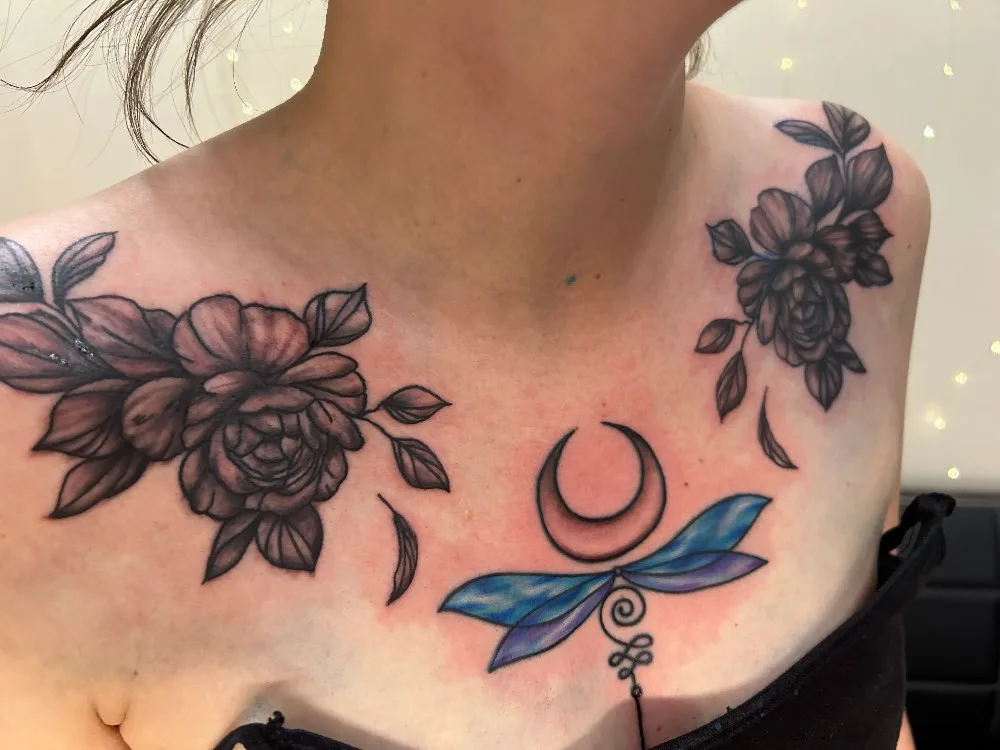
Harnesses, belts, bras
Seatbelts, duty belts, bra bands, aprons, harness systems and waistbands can cross the same line for an entire shift.
The best workwear solution is often chosen before the tattoo exists.
If you know a belt, boot, strap or vest lands on the same spot every day, tell the artist during placement—not after the tattoo is already there.
Before shift / during shift / after shift
Follow the artist’s dressing instructions. Put on clean clothing. Make sure required PPE fits correctly. If your work setup creates unavoidable rubbing directly over the tattoo, that is a scheduling problem—not a reason to jury-rig the equipment.
Keep normal workplace hygiene and PPE rules. Avoid unnecessary touching. Do not repeatedly unwrap, inspect and re-handle the tattoo at work just because you are worried about it. If a dressing becomes damaged or contaminated, follow the artist’s instructions for what to do next.
Get out of dirty or sweaty work clothing, wash according to your artist’s aftercare instructions, and let the skin settle. If the area is increasingly painful, hot, very swollen, draining unexpectedly, or otherwise concerning, contact the studio and seek appropriate medical care when needed.
Work / exposure matrix
This is the faster way to think about the problem: identify the exposure, the body area and what you can or cannot control during the shift.
| Work situation | Main tattoo concern | Placement hot spots | Best planning move |
|---|---|---|---|
| Construction / trades | Dust, sweat, kneeling, belts, harnesses, abrasive contact | Knees, waist, shoulders, boot line | Schedule before lighter/cleaner days and never alter required fall protection or PPE. |
| Healthcare | Frequent washing, glove cuffs, sleeves, contamination-control rules | Hands, wrists, forearms | Follow infection-control rules exactly; choose placement/timing that works with required hand hygiene and PPE. |
| Kitchen / hospitality | Heat, moisture, apron ties, waistbands, splashes | Waist, ribs, forearms | Use clean work clothing and avoid placing a fresh tattoo under a high-friction apron/belt line if possible. |
| Auto / mechanical | Grease, dirty surfaces, fluids, solvents, leaning on work | Hands, forearms, lower legs | Use normal chemical controls/PPE; do not treat tattoo dressing as chemical protection. |
| Warehouse / delivery | Seatbelts, lifting, repetitive motion, sweat | Waist, shoulders, thighs | Watch strap and waistband lines; schedule around the hardest shifts when practical. |
| Outdoor work | Sun, dust, weather, limited clean break space | Any exposed placement | Protect healing skin physically from sun and dirt; use long-term sunscreen only once the tattoo is healed. |
Different jobs create different problems
Dust + PPE + repetitive contact
The tattoo may spend all day under work pants, pads, belts or a harness while you move, kneel and sweat.
- Schedule around especially dirty or abrasive work when possible.
- Do not alter fall protection or required gear.
- Think carefully about knee, waistband, boot and shoulder placements.
Hand hygiene + gloves + contamination control
Frequent washing, gloves, sleeves and exposure-control rules can make hand, wrist and forearm tattoos harder to baby.
- Workplace infection-control rules outrank tattoo convenience.
- Do not improvise extra barriers that interfere with required glove use.
- Forearm placement may be easier to plan than hand/wrist placement depending on duties.
Heat + moisture + fast movement
Hot kitchens, dish areas, aprons, waistbands and constant movement can keep a new tattoo warm, damp and rubbed.
- Consider apron ties and waist placement.
- Use clean work clothing.
- Plan around intense kitchen shifts when possible.
Grease + leaning + solvents
Forearms, hands and lower legs can spend the day close to dirty surfaces, fluids, tools and cleaners.
- Use normal workplace PPE and chemical controls.
- Do not treat a tattoo dressing as chemical PPE.
- Fresh forearm pieces may be easier if scheduled before days off.
Friction + sweat + repetition
Seatbelts, lifting, waistbands, repetitive arm motion and long shifts can make certain placements irritating even in a relatively clean workplace.
- Watch belt and strap lines.
- Loose clothing helps only if it is actually compatible with the job.
- Movement itself is less important than rubbing and contamination.
Sun + dust + weather
Outdoor jobs add UV exposure, dirt, temperature swings and limited access to a clean environment during the day.
- Fresh tattoos should be physically protected from direct sun according to aftercare guidance.
- Do not start slathering sunscreen onto unhealed skin unless your artist’s guidance says the tattoo is ready.
- Long-term sun protection matters after healing too.
Can I wear work boots over a fresh tattoo?
Not if the boot collar or sock line repeatedly rubs or compresses the tattoo. A calf, ankle or lower-leg tattoo can sit exactly where boots create heat, pressure and friction for an entire shift.
Can I wear gloves over a fresh hand or wrist tattoo?
Required gloves still have to be worn correctly. The problem is that glove cuffs, repeated hand washing, heat and moisture can make hand/wrist placement more difficult to manage during healing.
Can I wear a uniform over a fresh tattoo?
Usually, if the uniform is clean and not creating heavy rubbing or pressure. A loose clean shirt over an upper-arm tattoo is a different problem from a tight waistband, body armor, duty belt or compression garment directly over fresh skin.
Can I work construction after getting a tattoo?
You may be able to, but construction stacks several healing problems together: dust, sweat, kneeling, abrasive surfaces and required PPE. If the tattoo sits under a harness, knee pad, boot, tool belt or other mandatory gear, scheduling around time off is often the better answer.
Can I work in healthcare after getting a tattoo?
Yes in many cases, but workplace infection-control rules come first. Hands, wrists and forearms are harder because of frequent washing, glove use and exposure protocols. Do not invent a tattoo-specific barrier that interferes with required PPE or hand hygiene.
Can I work as a mechanic with a fresh tattoo?
Plan around grime, fluids, solvents and repeated contact. Forearms and hands are especially exposed. Use normal workplace chemical controls and PPE; a tattoo dressing is not a substitute for gloves, sleeves or other protective equipment required for the task.
Sometimes the best aftercare tool is your calendar
For clients with physical jobs, the smartest planning can be boring: put the tattoo immediately before a couple of easier days instead of immediately before the hardest shift of the month.
Appointment before time off
A day or two without the worst friction, grime and gear gives you a much easier start.
Normal shift, controllable exposure
If clothing is clean, PPE does not rub the placement, and the environment is manageable, you may simply need good planning.
Required gear directly crushes the placement
If you cannot safely alter the gear, change the timing or reconsider the exact tattoo location.
Physical job or workout problem?
Some concerns overlap. If your job is essentially eight hours of lifting, sweating and repetitive movement, the next guide will feel familiar. But gyms add their own issues: shared equipment, stretching under load, mats, skin-to-skin contact, and swimming.
Working Out After a Tattoo
For lifting, running, CrossFit, climbing, yoga, BJJ, wrestling, contact sports and pools, jump to the activity-specific guide. The advice is related, but it is not the same as workplace PPE and contamination planning.
And the reverse is true.
If you are reading the workout guide because your “workout” is really a physically demanding job, come back here. Required PPE, chemical exposure and workplace contamination need their own plan.
Keep the question connected.
BL-INK guides are built as a system. Jump to the next question that actually affects your tattoo.
Working Out After a Tattoo
If the physical demand comes from training instead of your shift, use the return-to-training guide.
Read Workout Guide →Weeks 2–8
Know the difference between skin that is closed and skin that is actually ready for everything normal skin can handle.
Read Healing Guide →Work around the tattoo—not PPE.
Tell the artist where boots, belts, gloves, harnesses and uniforms land before the placement is final.
Start a Tattoo Project →Sources & workplace safety references
BL-INK’s tattoo guidance is studio education. Workplace PPE and chemical-control statements are grounded in OSHA guidance; medical warning-sign language is supported by dermatology guidance.
OSHA — Personal Protective Equipment overviewOSHA — Controlling chemical exposureOSHA — Dermal exposure control and preventionAmerican Academy of Dermatology — Tattoo skin reactions