Do I need a touch-up, rework, cover-up or laser?
Start with what you want to preserve. Small gaps or light spots can be touch-up territory. If you still like the tattoo but want broader improvement, think rework. If the goal is to hide or replace most of it, that becomes a cover-up problem. Very dark, dense work may benefit from professional laser lightening before a cover-up is designed.
What does your old tattoo actually need?
Keep the original design and correct limited areas rather than rebuilding the whole piece.
The project is probably broader than a maintenance touch-up.
The original tattoo remains part of the result, but the artist rebuilds enough of it to change how it reads.
If the goal is to substantially replace the old image, the new design has to work with the darkness and shape already in the skin.
Professional lightening can sometimes create more design options. It is a medical/cosmetic laser procedure—not a DIY tattoo-shop treatment.
Expect the new tattoo to use placement, scale, value and focal structure strategically. Cover-up ink is not opaque paint.
COVER-UP INK IS NOT OPAQUE PAINT.
A cover-up does not place a clean new image on top of an erased canvas. The darkness, size, shape, scarring and placement already in the skin still affect what the new tattoo can realistically do.
What does your tattoo actually need?
The four lanes overlap, and the right answer depends on the tattoo itself. This is a planning guide—not a remote diagnosis from a photo—but it can help you understand the vocabulary before a consultation.
The biggest misconception: “just tattoo over it.”
Cover-up ink does not behave like opaque wall paint. The old tattoo still exists underneath, so the new design has to use value, placement, scale and visual complexity strategically.
1. Touch-Up
A touch-up is the smallest lane. The original tattoo is still the tattoo—you are correcting isolated areas rather than redesigning it.
Small corrections
- Tiny areas that healed lighter than neighboring sections.
- A small break in a line.
- Minor saturation inconsistencies.
- A very limited area the artist wants to strengthen after healing.
When it's bigger than a touch-up
- The whole tattoo has softened substantially.
- You want major new elements or compositional changes.
- You dislike the original design.
- The piece needs structural rebuilding rather than spot correction.
The tattoo should be fully healed before anyone can fairly judge which areas genuinely need correction. Fresh or partially healed skin can look inconsistent temporarily.
A touch-up should not become a euphemism for “redo the entire tattoo.”
If the job requires major line rebuilding, new shading, new composition or new subject matter, you are probably talking about a rework instead.
2. Rework / Refresh
A rework keeps the existing tattoo as the foundation but meaningfully improves it. The artist may strengthen important edges, re-establish contrast, add or revise shading, restore saturation, simplify muddy areas, or add supporting material around the original work.
Are the main shapes still readable enough to preserve, or does the whole composition need to be rebuilt?
Can renewed darks, open skin and clearer transitions make the piece feel intentional again?
Would adding background or adjacent elements help integrate the original tattoo instead of fighting it?
Rework can be especially useful when the client still loves the subject but the execution, age or fading no longer feels right.
You do not have to hate an old tattoo to rework it.
Sometimes the goal is simply: “I still love this, but I want it to look deliberate again.”
3. Cover-Up
Cover-up constraints that change the design
| Existing tattoo | What it means for a cover-up | Likely design response |
|---|---|---|
| Small + faded | More flexibility than dense black work. | The new piece may not need to grow dramatically if enough contrast and shape freedom exist. |
| Dark + dense | Old dark values remain part of the design problem. | Use stronger focal structure, more scale, strategic dark areas, or consider lightening first. |
| Large + centered | The old silhouette controls a lot of the available composition. | The new tattoo often has to extend beyond the original footprint to create a believable new shape. |
| Scarred / raised | Skin condition becomes part of feasibility. | The artist may want the area evaluated or fully settled before deciding what can safely be tattooed. |
| Client wants lighter / brighter / same size | This is where expectations often collide with physics. | A cover-up usually cannot be the same size, same brightness and lighter than the tattoo underneath. |
A cover-up is a new design engineered around the visual problem created by the existing tattoo. That usually means the artist needs more freedom than a normal blank-skin tattoo.
Same size / lighter / unrelated
This is the hardest request because the new tattoo has very little room to redirect the eye away from the old one.
Larger / darker where needed / designed around it
More scale gives the artist room to place focal points away from the old tattoo and use darker or more complex areas strategically.
A cover-up usually cannot be the same size, same brightness, and lighter than the tattoo underneath.
You may be able to keep one or two of those goals. Keeping all three can severely limit what is possible.
A useful teaching analogy is stained glass: the old marks are still part of what the eye is receiving, and the new design has to redirect attention through stronger shapes and visual hierarchy. It is only an analogy—the skin and pigment are more complicated than literal layers of colored glass.
What gives a cover-up artist more options?
- Enough physical scale to create a new focal point.
- Freedom to move important parts of the new design away from the darkest old areas.
- A subject that naturally contains a range of values and textures.
- Willingness to let the composition expand beyond the old tattoo's exact outline.
- Realistic expectations about which old marks may still influence the new design.
4. When laser lightening enters the conversation
Sometimes the artist's problem is not that the old tattoo exists—it is that the darkest or densest parts leave too little visual room for the new design you want.
In that case, laser lightening can be discussed as a preparation step rather than an all-or-nothing removal plan. The goal may simply be to reduce certain areas enough that the cover-up artist has more flexibility.
More design freedom
Lightening a dense section can create more room for value changes, softer elements or a smaller final cover-up than would otherwise be practical.
This is a medical / professional service
Laser treatment should be evaluated and performed by an appropriately qualified provider. Outcomes and required sessions vary, so the tattoo artist should not promise a specific removal result.
Laser does not automatically mean “remove the whole tattoo.”
For cover-up planning, sometimes the useful goal is simply less pigment in the hardest area.
Can you cover a black tattoo with color?
Sometimes, but color is not opaque paint. A new color layer does not simply erase dark pigment underneath. The artist has to use the old values as part of the new composition, often with stronger structure, more scale or strategic dark areas.
Can a cover-up be the same size as the old tattoo?
Sometimes, but often the new design needs more room. A larger footprint gives the artist space to redirect the eye and create a new silhouette instead of tracing the exact boundaries of the tattoo you are trying to hide.
Can white ink cover black tattoo ink?
Do not think of white tattoo pigment like white house paint. White is not an opaque eraser over established dark tattoo pigment, and its healed appearance still has to be viewed through skin.
Do I need laser before a cover-up?
Not always. Laser lightening becomes useful when the old tattoo is so dark, dense or restrictive that reducing some pigment would create better design options. The FDA notes that laser tattoo removal/lightening is performed with medical laser devices and should be discussed with a qualified health-care professional.
What is the difference between a tattoo touch-up and a rework?
A touch-up maintains the existing tattoo; a rework changes more of it. Filling a few gaps is different from rebuilding contrast, structure, color or major shapes across the piece.
How an artist evaluates an existing tattoo
The artist is not only asking “how dark is it?” They are looking at the complete visual problem and the amount of flexibility available for the new piece.
How much solid dark or saturated pigment is concentrated in the area?
Are there strong outlines that will remain visually obvious under a new design?
How much larger can the new tattoo reasonably become?
Does the body area give enough space to redirect the composition around the old tattoo?
Is the area fully healed, scarred, raised, irritated or otherwise something that needs special consideration?
Do you want to preserve anything from the original, or is the goal a completely different visual identity?
What photos should you send?
A good consultation photo makes it much easier to decide whether an in-person look is needed and which lane is realistic.
Straight-on, natural light
Show the tattoo clearly without heavy filters, extreme shadows or an angled pose that hides the shape.
Include the surrounding body area
Do not crop so tightly that the artist cannot see how much usable skin exists around the tattoo.
Include approximate measurements
A ruler or written width/height estimate gives much more information than a close-up photo alone.
Send the tattoo as it looks now
Do not edit out fading, discoloration or old lines. Those are exactly the details the artist needs to evaluate.
What to tell your artist
The most helpful consultation does not start with “cover this somehow.” It gives the artist clear priorities and enough freedom to explain the tradeoffs.
What do you want to keep?
Maybe the subject still matters. Maybe one name or symbol has to stay. Maybe nothing needs to survive.
What do you want gone?
Be specific about the part that bothers you most—the subject, darkness, placement, linework or entire design.
What new direction do you want?
Bring references for mood, subject and style without demanding that one exact image be forced over the old tattoo.
How much bigger can you go?
Your willingness to expand the footprint can completely change what the artist is able to design.
The consultation may change the category.
You may arrive asking for a cover-up and discover that a rework is enough—or arrive expecting a touch-up and learn that the tattoo needs more structural rebuilding.
See work that uses contrast and scale
As BL-INK's gallery grows, this guide should link to actual before/after reworks, healed cover-ups and pieces where the artist used larger scale or darker structure strategically.
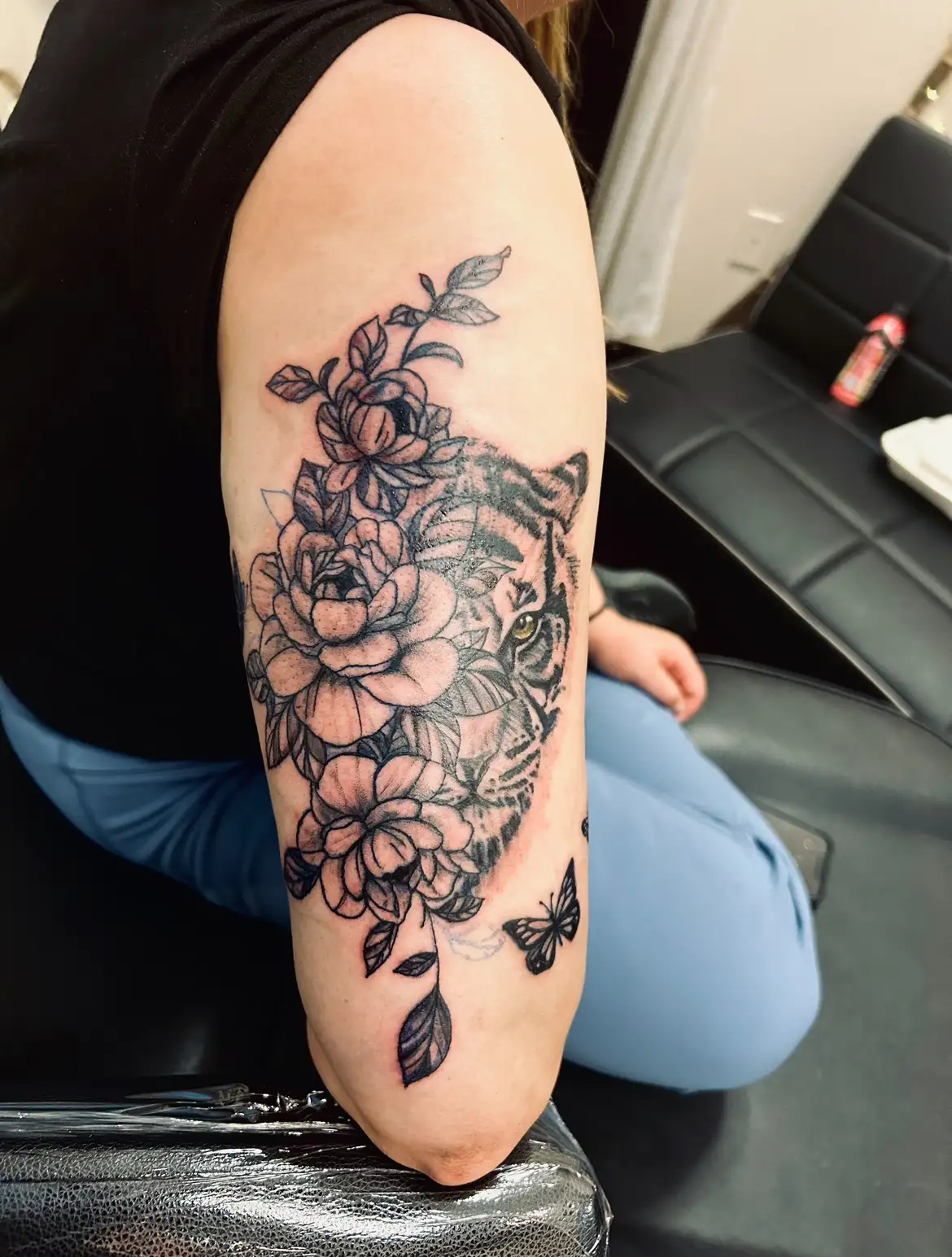
Tiger & Peonies
Explore strong value structure →
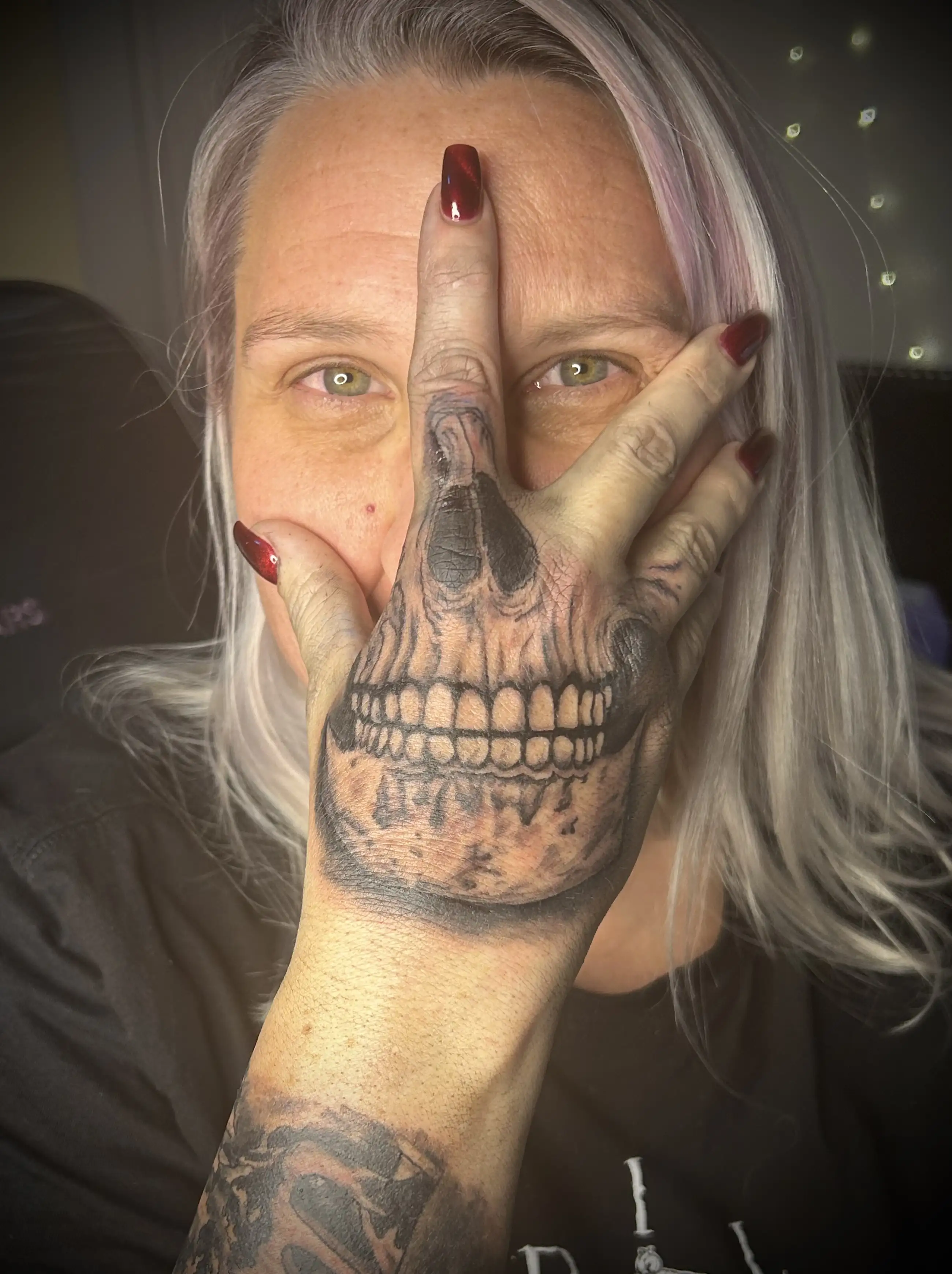
Dense Black & Grey
See how darker structure reads →
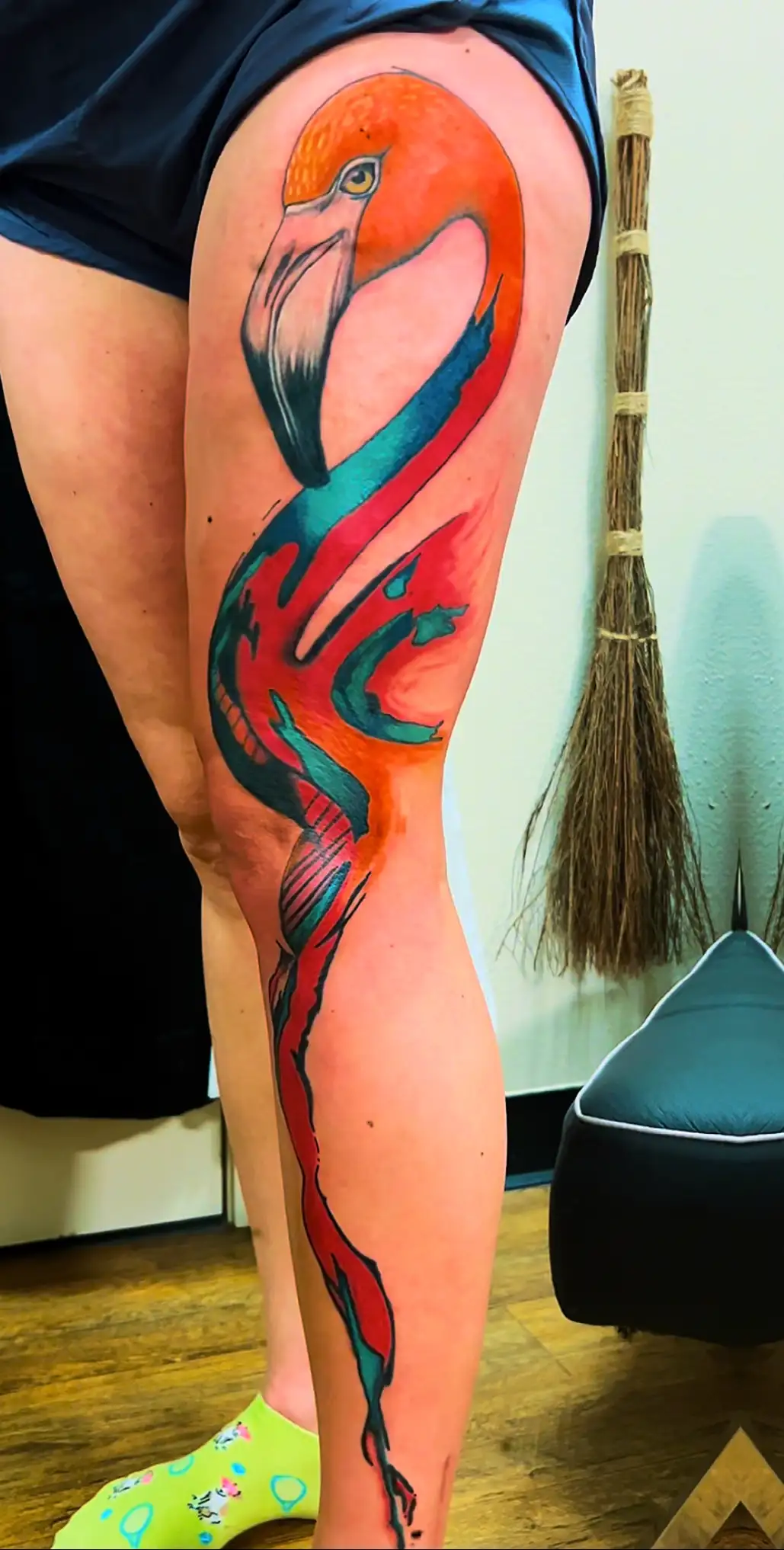
Why size changes options
Read Size & Body Flow →
Keep the question connected.
BL-INK guides are built as a system. Jump to the next question that actually affects your tattoo.
Size & Body Flow
A cover-up often needs more room, stronger structure and better use of the body than the original tattoo.
Read Design Guide →Look at contrast and scale
Use real tattoo work to think about visual weight, focal points and how larger compositions control the eye.
Explore Tattoo Work →Send the tattoo as it really looks.
Clear current photos, placement, size and what you want to keep or change make the first conversation much more useful.
Start a Rework Project →Laser-removal reference
Cover-up design guidance is BL-INK studio education. Laser tattoo removal/lightening is a medical/cosmetic procedure and belongs with qualified health-care professionals.
FDA — Tattoo Removal: Options and Results