Why does my tattoo look shiny or cloudy after peeling?
That can be part of normal surface healing. After the obvious flakes and scabs are gone, newly formed surface skin may look glossy, tight, wrinkled or slightly cloudy while it continues settling. What matters is the overall trend: normal healing should generally become calmer, not increasingly painful, hot, swollen or red.
Normal weirdness—or something that needs attention?
Those are not “just keep moisturizing” questions. Contact an appropriate health-care professional promptly.
Dryness, itching, flaking and shine can happen during healing, especially when they are gradually improving rather than escalating.
Gentle cleansing, light moisturizer as needed, no picking, no aggressive exfoliation, and no assumption that “closed” means ready for every normal activity.
Once fully healed and comfortable, ordinary skin care and long-term sun protection can return gradually.
MOISTURE, NOT A COATING.
The goal is comfortable, flexible healing skin—not keeping the tattoo visibly slick all day. A light amount of simple moisturizer when the skin needs it is different from burying new skin under a heavy coating.
The middle of healing is not one exact schedule
People love precise day-by-day tattoo charts. Bodies are less interested in following them. Size, placement, skin, technique and aftercare all change the pace, so these phases are best treated as a flexible map rather than a deadline.
Peeling + itch
The tattoo may look dry, flaky or uneven while the surface sheds.
- Keep washing gently.
- Use a light amount of simple moisturizer.
- Do not pick peeling skin.
- Expect the tattoo to look temporarily less dramatic.
Shiny / cloudy stage
The dramatic flaking often settles, but the surface can still look glossy, tight, wrinkled or slightly “plastic.”
- Skin can feel deceptively healed.
- Continue to avoid aggressive exfoliation.
- Ease back into normal life based on the skin itself.
- Do not judge final color yet.
More normal outside
The top layer is usually looking much more ordinary, while deeper recovery can continue.
- Moisturize as needed.
- Return toward normal skincare only when fully healed.
- Begin long-term sun protection once the skin is ready.
- Compare healed results—not day-three photos.
Your tattoo does not have to look Instagram-ready while it heals.
Dullness, temporary cloudiness, shine and uneven texture can all make fresh work look “wrong” before the surface finishes recovering.
Why does healed-looking skin still look shiny?
After the obvious flakes and scabs are mostly gone, the new surface can still look unusually smooth, shiny or slightly wrinkled. The easiest way to think about it is that the visible barrier is rebuilding while the tattoo underneath is still settling into a more normal-looking skin surface.
Moisture, not a coating
Moisturizer should make healing skin comfortable—not turn the tattoo into a permanently glossy, sticky layer. The useful target is simple: skin that is comfortable and flexible without being greasy or smothered.
Tight + cracked-feeling
Skin may feel excessively tight, itchy or uncomfortable. A light application of a simple moisturizer can help.
Comfortable + flexible
The skin does not need to look wet. It should simply feel comfortable rather than parched or coated.
Constantly slick
More product is not automatically more healing. Heavy, repeated coating can leave the area sticky and unnecessarily occluded.
Normal healing vs. “this deserves attention”
Some itching, flaking and soreness can be part of normal tattoo healing. The direction matters: normal irritation should generally trend toward calmer, not become progressively more painful, hot, swollen or angry.
Usually not an emergency
- Dryness and flaking that gradually improves.
- Mild itching without spreading rash.
- Temporary shine or cloudiness.
- Tenderness that is getting better rather than worse.
- Color looking less vivid than it did immediately after tattooing.
Watch for worsening symptoms
- Redness that spreads or gets darker instead of fading.
- Pain that increases instead of settling down.
- Skin that becomes notably hot.
- Pus, significant drainage or bad odor.
- Fever, chills, red streaking, open sores, or feeling genuinely ill.
Do not ask the internet to diagnose an infection from one photo.
If the tattoo looks or feels increasingly wrong, contact the studio and get appropriate medical care. Infection and allergic reactions are medical problems, not aftercare-aesthetic problems.
Is a tattoo supposed to be shiny after two weeks?
It can be. The exact timing varies, but once obvious peeling settles, newly formed surface skin can look shiny or slightly wrinkled before it looks fully normal again.
Why does my tattoo look cloudy or faded after peeling?
Fresh tattoos often look brighter than healed tattoos. Surface dryness, new skin and changing light reflection can temporarily make the piece look duller or cloudier. Do not judge final color during the middle of healing.
How do I know if I am over-moisturizing my tattoo?
The goal is comfortable skin, not a permanently slick coating. If the tattoo is constantly greasy, tacky or smothered in product, use less. A simple light layer when the skin actually feels dry is usually easier to manage.
When can I exfoliate a tattoo?
Wait until the tattoo is fully healed before returning to scrubs, loofahs, exfoliating acids or retinoids on that area. Exfoliation is not required to “remove the shiny layer” and should not be used to rush peeling skin off.
How can I tell normal tattoo healing from possible infection?
Look at the direction of change. Some redness, soreness, clear fluid, itching, flaking and scabbing can occur during normal healing. Redness that spreads or darkens, pain that worsens, pus, fever, chills or open sores are reasons to seek medical care.
When does normal skincare come back?
The mistake here is treating a calendar day as permission to throw every scrub, acid and retinoid back at the area. The better rule is: wait until the tattoo is fully healed before returning to exfoliating or potentially irritating actives.
Keep the routine simple. Gentle cleansing and light moisturizer. Skip scrubs, loofahs, exfoliating acids, retinoids and other aggressive actives on the tattoo.
Normal bathing and daily life start feeling more ordinary, but do not rush exfoliation just because the tattoo looks less dramatic.
Normal skin care can return gradually. Long-term sun protection becomes part of keeping the tattoo—and the skin around it—in better condition.
Gym, work, swimming and the “almost healed” trap
Weeks 2–8 are where people often feel normal enough to forget that the skin may still be finishing its recovery. That is why the rest of this guide library connects directly into activity-specific pages.
Shared surfaces + friction
If you are getting back to lifting, running, BJJ, wrestling, contact sports or swimming, use the activity guide instead of assuming “it stopped peeling” means every activity is back on.
PPE + uniforms + dirt
Work gear creates a different problem than a workout. Tool belts, boots, scrubs, harnesses, chemicals and dirty environments need their own plan.
Submersion waits
Do not treat a peeling or shiny tattoo like fully intact skin just because it feels mostly okay. Wait until the tattoo is fully healed before soaking it.
The goal is healed work—not permanently fresh work
One of the reasons the BL-INK gallery should eventually label fresh and healed photos separately is that clients deserve to see what good tattoos look like after the swelling, shine and fresh saturation settle down.
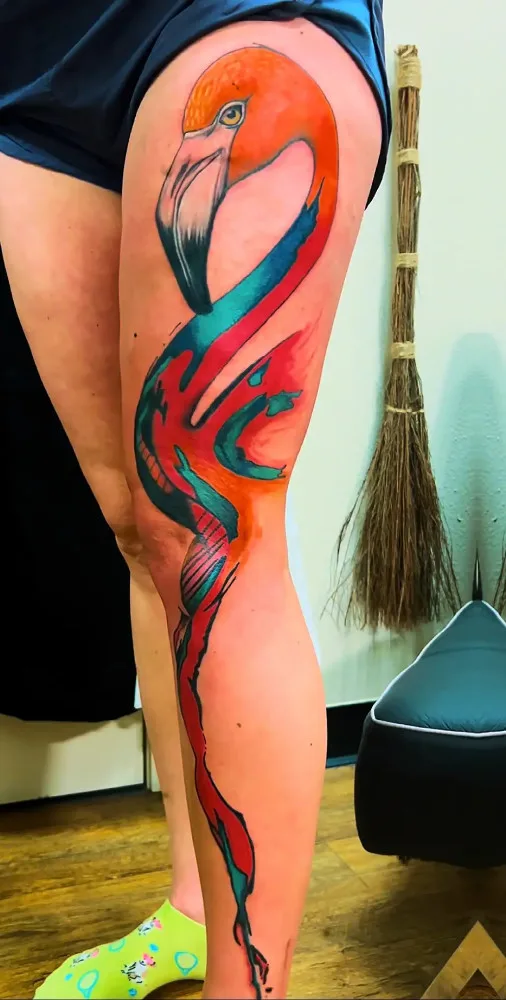
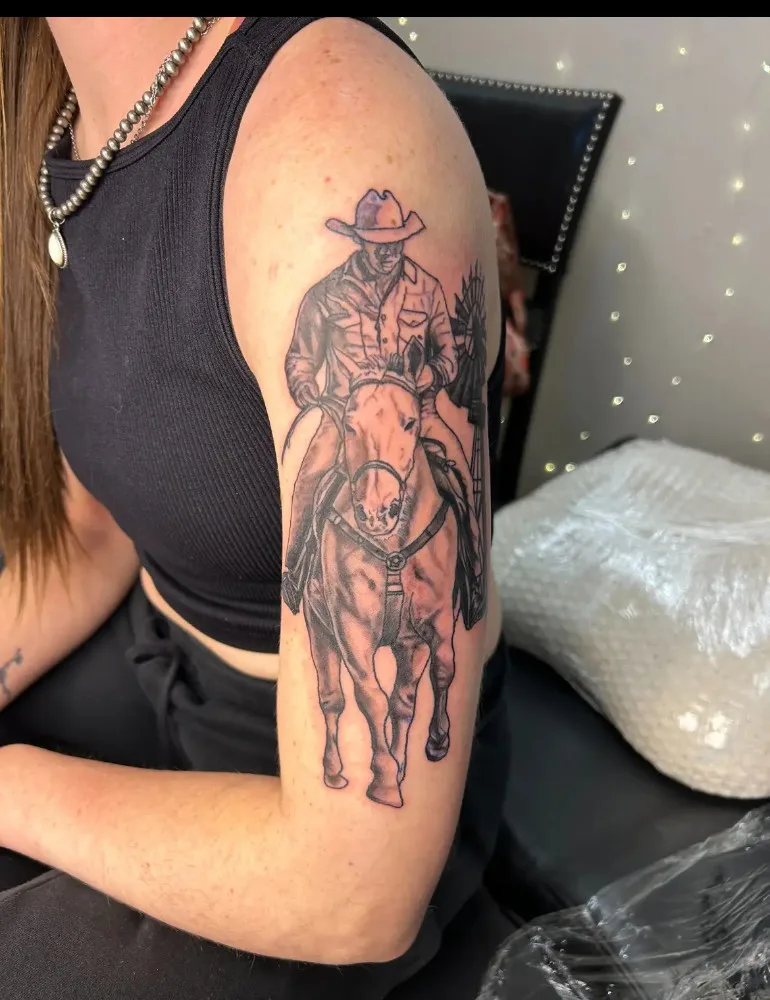
Read structure, not gloss
Good composition matters after the fresh-tattoo shine is gone.
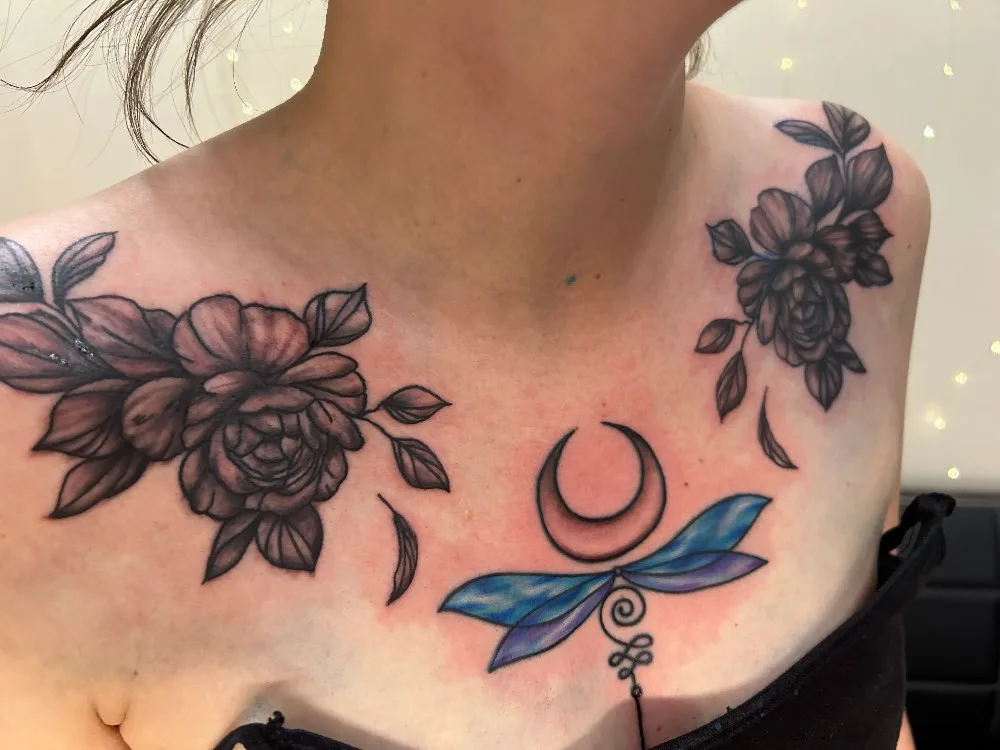
Skin becomes part of the image
That is why healed references are so useful for color expectations.
Keep the question connected.
BL-INK guides are built as a system. Jump to the next question that actually affects your tattoo.
Working Out After a Tattoo
If the question is lifting, running, BJJ, swimming or sauna, use the activity-specific decision guide.
Read Workout Guide →Work, Uniforms & PPE
Boots, gloves, scrubs, straps, dust and workplace controls create a different set of problems.
Read Work Guide →How Tattoos Age
Once the tattoo is fully healed, move from aftercare into normal skin care and long-term sun protection.
Read Longevity Guide →Sources & skin-health references
BL-INK’s practical aftercare guidance is studio education, not individualized medical advice. Warning-sign language is grounded in dermatology and FDA tattoo-safety guidance.
American Academy of Dermatology — Tattoo skin reactions and infection signsFDA — Think Before You Ink: Tattoo Safety