Can I work out after getting a tattoo?
Usually not at full intensity right away. If the tattoo is open, weeping, actively scabbed, heavily peeling, tender or easily irritated, treat it like healing skin. Low-contact movement can often return sooner than activities involving shared mats, skin-to-skin contact, heavy friction, tight gear or submersion. The condition and placement of the tattoo matter more than one universal day number.
Should I train today?
Skip the workout that puts the tattoo against shared equipment, friction, pressure, mats or water. Keep following aftercare.
Closed skin is a better starting point, but peeling, shine, tightness and irritation still matter.
Avoid grinding the area into equipment, tight clothing or shared surfaces. If movement makes it sting or angry, back off.
Now the biggest question is what will touch, stretch, soak or contaminate the tattoo.
BJJ, wrestling and contact sports combine abrasion, pressure and shared surfaces. Return only when the tattoo is fully closed and healed enough for normal skin contact.
Submersion belongs later in the healing process, when the tattoo can be treated like normal intact skin.
If the skin is closed and comfortable, start conservatively and avoid movements, pads or benches that directly rub the tattoo.
If clothing or equipment presses and rubs the tattoo for the whole session, modify the activity or wait until the skin tolerates normal friction.
This chart is practical studio guidance, not a diagnosis or a universal medical timeline. If the tattoo is becoming more painful, hot, swollen, increasingly red or otherwise concerning, stop treating it like a workout-planning problem and get appropriate medical advice.
Three quick truths
Sweat does not “push the ink out.”
The concern is that sweat, friction, heat and shared surfaces can make healing skin more irritated or harder to keep clean.
A normal workout does not magically cause blowout.
Blowout is not the result of doing a biceps curl after your appointment. But stretching and rubbing a tender placement can still make the healing process miserable.
Some activities deserve a longer wait.
BJJ, wrestling, football, swimming and anything with skin contact, mats, impact or submersion are a different category from an easy walk.
Sweat isn't the question. Contact is.
A workout becomes a tattoo-healing problem when the placement is being rubbed, compressed, soaked, scraped, stretched aggressively, or exposed to shared surfaces before the skin is ready.
Is the tattoo actually ready for normal training?
A calendar date is useful, but the skin itself matters more. If the tattoo is still open, weeping, scabbed, heavily peeling, tender or irritated, it is not ready for everything normal skin is ready for.
Open, wet/weeping, actively scabbed, bleeding, very tender, increasingly red, or clearly irritated. This is not the moment for shared benches, mats, pools or aggressive stretching.
Closed but still peeling, shiny, tight or easily irritated. Light movement may be reasonable, but high-friction training and direct pressure over the tattoo can still be a bad trade.
Surface closed, comfortable, no active peeling/scabbing, and normal movement does not make the area angry. This is when returning toward usual activity becomes more straightforward.
Return-to-training matrix
Use this as a fast comparison tool. “Lower risk” does not mean “zero risk,” and the tattoo itself still has to be closed and comfortable enough for the activity.
| Activity | Main concern | Relative concern | Useful return cue |
|---|---|---|---|
| Walking / easy cardio | Heat, sweat, clothing friction | Lower | Skin is closed; clothing is not rubbing the tattoo; movement feels comfortable. |
| Weight lifting | Bench/pad pressure, stretch, belts, equipment contact | Placement-dependent | Closed skin plus a workout that does not press or grind directly on the tattoo. |
| Running / cycling | Repeated motion, waistbands, sports bras, socks, fitted gear | Placement-dependent | No active weeping/scabbing; repeated motion and clothing do not irritate the area. |
| CrossFit / circuits | High sweat, floor contact, bars, rigs, belts, fast transitions | Moderate | Closed and calm skin; scale the workout to avoid direct tattoo contact and friction. |
| Yoga / climbing | Deep stretch, mats, holds, wall contact | Moderate | The tattoo tolerates normal stretching and is not being ground into shared surfaces. |
| BJJ / wrestling / contact sports | Skin-to-skin contact, mats, abrasion, pressure | High | Wait until the tattoo is fully closed and healed enough for normal abrasion and contact. |
| Swimming / hot tubs | Prolonged submersion and shared water | High | Wait until the tattoo is fully healed before submersion. |
| Sauna / steam room | High heat, heavy sweating, shared surfaces | Moderate | Wait until skin is closed, no longer peeling or irritated, and your artist considers it ready. |
| Compression leggings / tight gear | Constant pressure, friction, trapped moisture | Placement-dependent | The fabric can sit on the area without sticking, rubbing, stinging or leaving it irritated. |
When in doubt, choose the boring option for a few days.
A tattoo will be on you for years. Missing a couple of workouts is a much smaller problem than turning a healing issue into a bigger one.
Different training creates different problems
Low contact, low friction
Easy movement is usually the simplest category because the tattoo is not being pressed into equipment or aggressively stretched.
- Keep the tattoo out of dirty/shared contact.
- Do not trap it under a rubbing waistband or strap.
- If heat and sweat make it sting or become irritated, back off.
Pressure + stretch + equipment
The exercise itself is not the only issue. Think about benches, pads, bars, belts and how the skin is stretched under load.
- Back tattoo? Benches matter.
- Fresh thigh tattoo? Hip pads and machines may matter.
- Fresh shoulder tattoo? Bar position and clothing may matter.
Repetition + clothing friction
A run may be clean, but thousands of repeated steps can make shorts, sports bras, socks, shoes or waistbands rub the same fresh area.
- Think placement first.
- Heat and moisture under fitted gear can irritate healing skin.
- Easy sessions are different from long endurance work.
Stretch + surfaces
Deep stretching can pull across certain placements, while mats, holds and wall contact add another contamination/friction layer.
- Large torso, rib and joint-adjacent work may feel tighter.
- Avoid grinding fresh skin into shared surfaces.
- Do not force end-range stretches just because you normally can.
Can I lift weights after a tattoo?
Sometimes sooner than contact sports—but placement decides a lot. The biggest issues are direct pressure from benches or pads, friction from belts and straps, and stretching a tender area under load. A fresh back tattoo and a bench press session are a different problem from a calf tattoo during light upper-body work.
Can I run after a tattoo?
Running is mostly a friction-and-placement question. Repeated steps can turn shorts, waistbands, sports bras, socks or compression gear into thousands of small rubs against the same healing area. An easy run with no direct contact is not the same as a long, hot endurance session.
Can I do CrossFit after a tattoo?
CrossFit stacks several concerns together: heavy sweating, bars and rigs, floor contact, belts, fast transitions and a lot of full-range movement. If you return early, scale the session around the tattoo instead of assuming every movement has the same risk.
When can I use a sauna after a tattoo?
Not while the tattoo is still open, peeling, scabbed or easily irritated. Sauna and steam-room sessions add high heat, heavy sweating and shared surfaces. Wait until the skin is closed and calm, then make the first return conservative rather than turning it into an endurance test.
Can I wear compression leggings over a fresh tattoo?
Tight clothing can be a problem when it presses, sticks or repeatedly rubs the healing area. For a fresh thigh, calf, hip or waist tattoo, compression gear can combine friction with trapped heat and moisture. Loose clothing is usually the simpler early-healing choice when the placement allows it.
Placement changes the training problem
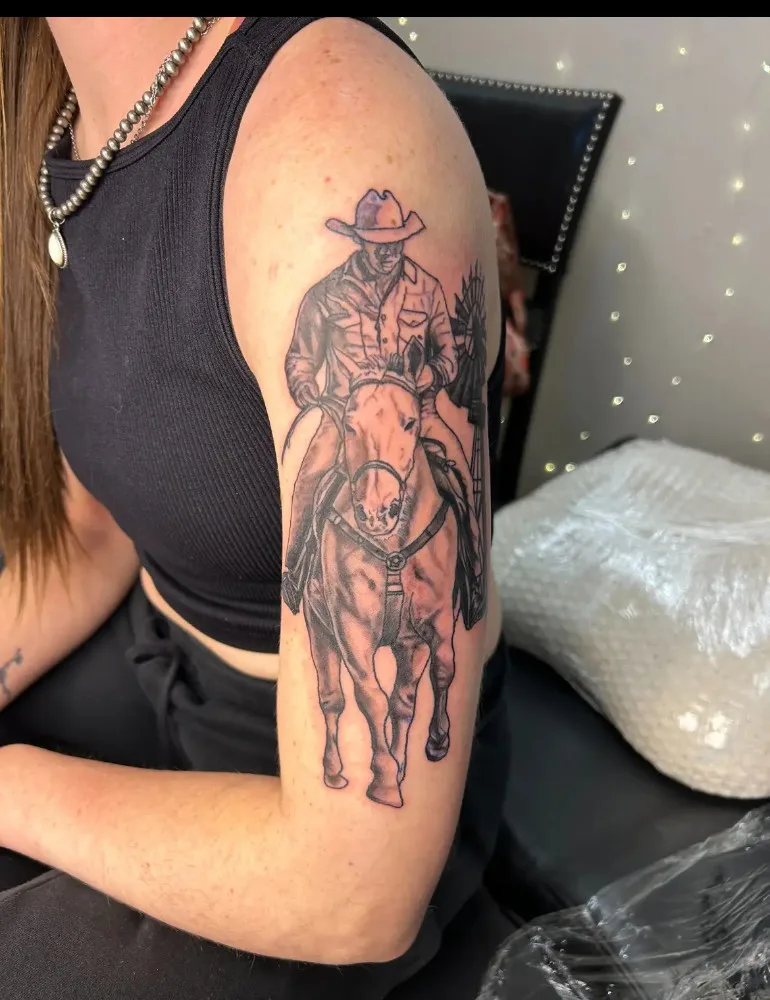
Shoulder / upper arm
Pressing, straps, bar position, shoulder pads and arm movement can all land directly on the tattoo.

Forearm / wrist
Bars, grips, straps, mats, chalky surfaces and frequent washing make this a high-contact training placement.
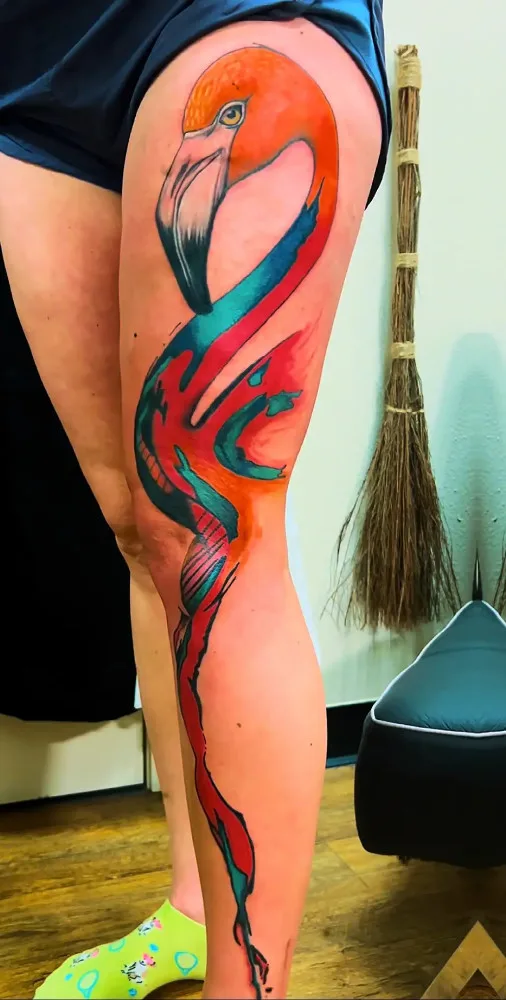
Leg / calf / thigh
Running, cycling, squat pads, machines, compression clothing and shin contact can change what feels reasonable.
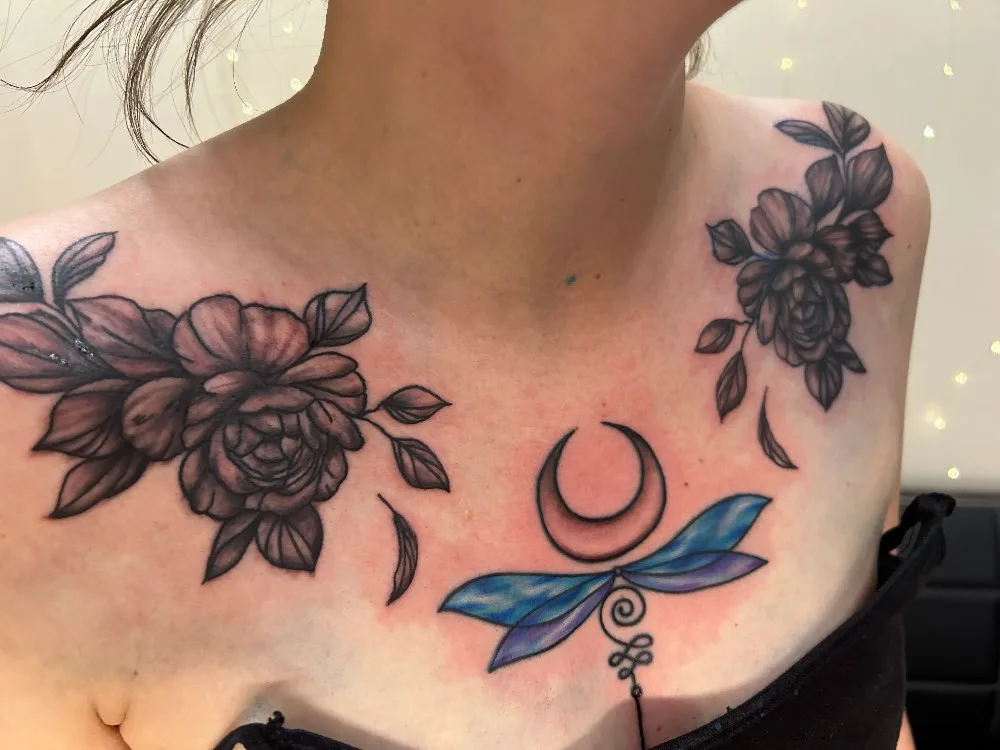
Chest / ribs / torso
Bench contact, sports bras, belts, harnesses and deep torso rotation can all become the limiting factor.
BJJ, wrestling & contact sports are different
For BJJ, wrestling and similar sports, the conservative approach is to wait until the tattoo is fully closed and healed enough to tolerate normal skin contact and abrasion. Some studios use roughly a couple of weeks or more as a practical rule for contact sports, but healing speed varies—follow your artist’s advice and the actual condition of the skin.
Covering it is not the same as making it safe.
A rash guard, sleeve or bandage does not magically remove friction, mat exposure or skin trauma. If the tattoo is not ready for contact, adding fabric over it does not change that basic fact.
Swimming, hot tubs & submersion
Swimming adds prolonged water exposure plus whatever is in that water. The practical rule is simple: avoid submerging a fresh tattoo until the surface is fully healed.
Chlorinated water
The problem is not that chlorine “bleaches the ink out.” The issue is soaking healing skin in shared water before the surface has recovered.
Hot tubs
Heat, soaking and shared water make this an easy activity to postpone while the tattoo is still healing.
Lakes / oceans
Natural water is still not a sterile environment. Wait until the tattoo is healed before treating it like normal intact skin in open water.
What if your job is your workout?
Construction, warehouse work, delivery, healthcare, kitchens, mechanics and other physical jobs add something the gym usually does not: required uniforms, PPE, dirty environments and chemical exposure.
Working With a Fresh Tattoo
If the real question is “I have to wear boots, a vest, a harness, scrubs or a tool belt for eight hours,” switch to the work guide. It covers the gear and contamination problem in much more detail.
The two guides are meant to work together.
A warehouse worker who lifts after work, a firefighter who trains, or a mechanic who does BJJ has overlapping concerns. Use the section that matches what is actually touching and stressing the tattoo.
Keep the question connected.
Training is only one part of planning around a tattoo. Jump into the problem that actually matches your life.
Workwear & PPE
If the issue is boots, scrubs, harnesses, uniforms, grease, dust or required safety gear, use the workplace guide.
Read Work & PPE →Leg & Arm Tattoos
See how placement changes composition and where straps, benches or fitted gear might actually land.
Explore Tattoo Work →Training around a new tattoo?
Tell the artist what sport you train, where gear sits, and what events or competitions are coming up.
Start a Tattoo Project →Sources & medical references
BL-INK’s activity guidance is studio education, not individualized medical advice. These references support the skin-healing, infection-warning, tight-clothing, workout-skin and submersion guidance used on this page.
Cleveland Clinic — Tattoo Aftercare Tips From a DermatologistAmerican Academy of Dermatology — Tattoo Skin Reactions & Infection SignsAmerican Academy of Dermatology — How Workouts Affect Your SkinMayo Clinic — Tattoos: Risks, Precautions & Healing Care